
Last Updated: October 22, 2026
Quick Summary
Supplements for mental clarity work best when matched to solid evidence: omega-3 for foundational nutrition, B vitamins only for confirmed deficiencies, and caffeine with L-theanine for short bursts of focus. Verify doses on the label, set a realistic timeline, and test for deficiencies before buying.
- B vitamins help concentration mainly when a confirmed B12 or folate deficiency exists.
- Caffeine plus L-theanine acts within 30 to 60 minutes for short bursts of concentration.
- Bacopa monnieri typically needs 4 to 12 weeks of daily use before effects appear.
- Ginkgo, high-dose fish oil, and some botanicals can raise bleeding risk with anticoagulants.
- Photograph the supplement facts panel and compare doses against amounts used in published studies.
Table of Contents
- Why Mental Clarity and Focus Supplements Are Everywhere in 2026
- Nootropic Supplements: What the Evidence Actually Supports
- Supplements for Concentration and Memory: A Comparison Table
- Vitamins for Brain Fog: Deficiency Testing and Who May Benefit
- Brain Supplements for Focus: Product Quality and Label Evaluation
- Safety, Interactions, and When to Consult a Clinician
- Realistic Timelines, Measurable Outcomes, and Non-Supplement Foundations
- Conclusion: Building a Mental Clarity Routine That Fits
- Frequently Asked Questions
Why Mental Clarity and Focus Supplements Are Everywhere in 2026
Walk into any gym, dorm room, or open-plan office and you will find a bottle of pills promising sharper thinking. At Nutra Farms - Stone Age Nutritionals, we see the same question from customers every week: does any of this actually work, or is it expensive hope in a capsule?

The honest answer sits somewhere between the marketing extremes. Some ingredients have real research behind them. Others have thin or conflicting evidence. And a surprising number of products on the shelf are built around underdosed blends that look impressive on the label but deliver little.
Below, we break down what the evidence supports, which ingredients to prioritize, how to read a label like a skeptic, and when to talk to a clinician instead of buying another bottle.
Nootropic Supplements: What the Evidence Actually Supports
Nootropic supplements are products marketed to support cognitive performance, including memory, attention, and processing speed. The category spans single ingredients like fish oil and B vitamins, herbal extracts like ginkgo and ginseng, and multi-ingredient formulas that combine several at once.
Most guides flatten this category into a single "does it work?" verdict. That is the wrong question. The useful question is which ingredient, at which dose, in which population, has been studied well enough to justify the money.
How to Read Evidence Quality
Three questions separate strong findings from preliminary ones:
- Study type: Randomized controlled trials in humans carry more weight than observational studies, animal research, or test-tube findings. A promising mouse study is a starting point, not a recommendation.
- Population match: Research on older adults with mild cognitive impairment does not automatically transfer to a healthy 25-year-old. Many trials enroll people with a diagnosed deficiency or condition, which inflates the apparent benefit for the general buyer.
- Outcome measured: Subjective alertness, lab-based memory tests, and real-world daily functioning are different endpoints. A product can improve a lab score without changing how you function at work.
Keep those three filters in mind as you read the ingredient summaries below.
Omega-3 Fatty Acids and Fish Oil
Omega-3 fatty acids, particularly DHA and EPA, are among the better-studied nutrients for brain health. DHA is a structural component of brain tissue, and many people fall short on dietary intake. Evidence is strongest for general nutritional support and for people with low intake; it is weaker for the idea that extra omega-3 sharpens cognition in people who already eat enough fatty fish.
Our Stone Age Omega-3 Fish Oil delivers EPA and DHA in a straightforward softgel format, taken twice daily with meals. It is not a stimulant and will not produce a noticeable "kick"; the benefit is cumulative nutritional support, not a quick buzz.
B Vitamins, Including B12 and Folate
B vitamins support nerve function and energy metabolism, and deficiencies in B12 or folate can show up as fatigue and poor concentration. The evidence here is strong for one specific scenario: correcting a confirmed deficiency.
This distinction matters. B vitamins are not a universal cognitive enhancer; they are a correction for a shortfall. Testing before supplementing is the smarter move, and we cover that below.
Herbal Ingredients: Ginkgo Biloba and Ginseng
Ginkgo biloba and ginseng are the two botanicals most associated with traditional cognitive support. Ginkgo has been studied for circulation and memory, with mixed findings across trials; some older-adult studies show modest effects, while larger trials in healthy adults have been less encouraging. Ginseng appears in research on fatigue and alertness, though study designs, extracts, and doses vary widely, which makes head-to-head comparison difficult.
What most guides miss is dose transparency. Many herbal products list a blend weight without specifying extract standardization, which makes it impossible to compare against the research. Look for standardized extracts with stated percentages, and treat a bare herb weight as a yellow flag.
Bacopa Monnieri and Lion's Mane Mushroom
Bacopa monnieri has a small but consistent body of research on memory consolidation, typically requiring weeks of daily use before effects appear. The studies are promising but often small, and the extract and dose matter. Lion's mane mushroom is popular in nootropic supplements for nerve support, though human evidence remains limited compared with the enthusiasm around it; most of the supportive data comes from animal and early-stage human work.
Neither is a same-day fix. If you expect to feel something after one capsule, you will be disappointed.
Caffeine and L-Theanine
Caffeine paired with L-theanine is one of the few combinations with a plausible acute effect on attention without the jittery edge of caffeine alone. The research is moderate and short-term, focused on alertness and attention rather than long-term memory.
Our Stone Age Energy Powder pairs the two in a sugar-free yuzu formula with electrolytes and B vitamins, built for a steady lift rather than a spike and crash.

Supplements for Concentration and Memory: A Comparison Table
| Ingredient | Primary Focus | Evidence Strength | Typical Timeline | Best For |
|---|---|---|---|---|
| Omega-3 (EPA/DHA) | Brain structure, general support | Moderate to strong | Weeks to months | Daily foundational nutrition |
| B12 and folate | Nerve function, energy | Strong for deficiency | Weeks | People with confirmed low levels |
| Ginkgo biloba | Circulation, memory | Mixed | Weeks | Older adults exploring options |
| Ginseng | Alertness, fatigue | Mixed | Days to weeks | Occasional mental fatigue |
| Bacopa monnieri | Memory consolidation | Moderate | 4-12 weeks | Students, long study periods |
| Lion's mane | Nerve support | Limited human data | Weeks | Curious, cautious experimenters |
| Caffeine + L-theanine | Acute focus | Moderate | 30-60 minutes | Short bursts of concentration |
That last row is worth pausing on. Caffeine paired with L-theanine is one of the few combinations with a plausible acute effect on attention without the jittery edge of caffeine alone. Our Stone Age Energy Powder pairs the two in a sugar-free yuzu formula with electrolytes and B vitamins, built for a steady lift rather than a spike and crash.
Vitamins for Brain Fog: Deficiency Testing and Who May Benefit
Vitamins for brain fog only help when a shortfall actually exists. B12, folate, vitamin D, and iron are the usual suspects, and each can produce fatigue or concentration problems when low.
Stone Age Energy Powder – Caffeine + L-Theanine, Sugar-Free Yuzu Flavor →
Who most often benefits from testing? Adults over 40, anyone on restrictive diets, people with absorption issues, and anyone who has felt persistently foggy for months. If your levels come back normal, supplements are unlikely to be the answer, and that is useful information too.
Brain Supplements for Focus: Product Quality and Label Evaluation
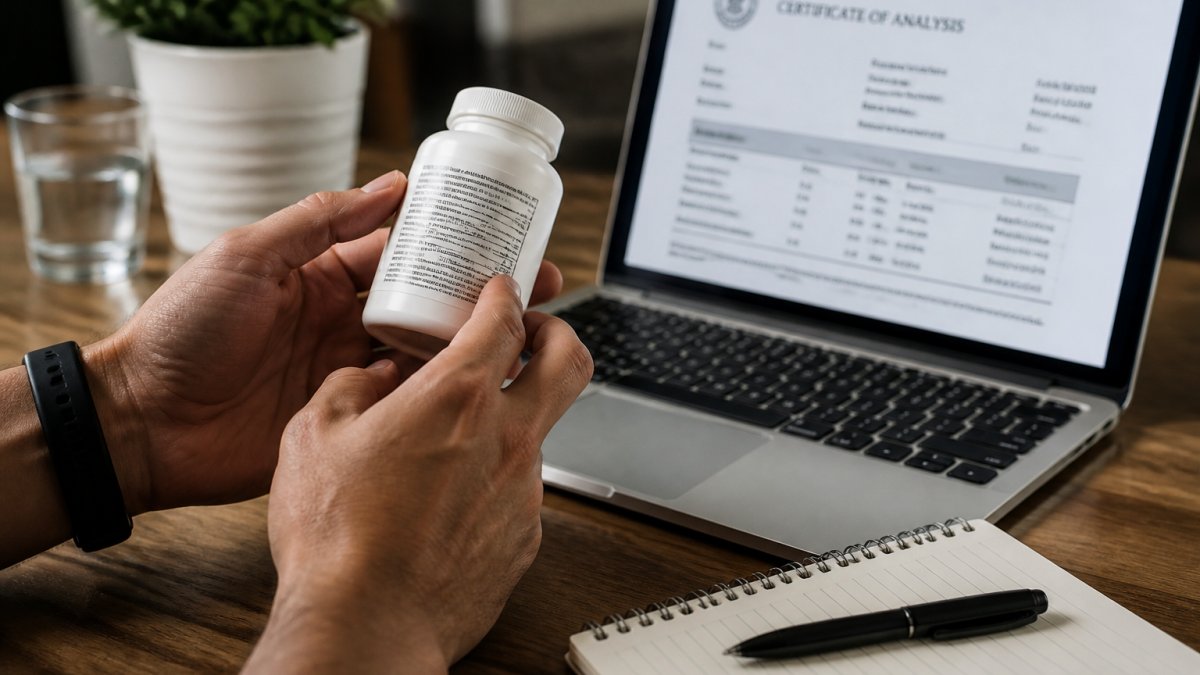
Brain supplements for focus are only as good as what is actually inside the capsule. Three label checks separate serious products from marketing:
- Standardized extracts: Look for stated percentages, such as "standardized to 24% flavone glycosides" rather than a bare herb weight.
- Third-party testing: Certificates of analysis or independent lab verification signal that potency claims were checked, not just printed.
- Serving size honesty: If the efficacious dose requires three capsules and the bottle holds thirty, you are buying a ten-day supply at a month-long price.
A common mistake is buying a large proprietary blend with a single total milligram figure. You cannot verify any individual ingredient's dose, which makes the whole formula impossible to evaluate against research.
Safety, Interactions, and When to Consult a Clinician
Supplements are not risk-free, and the interaction question deserves more attention than it usually gets. The FDA regulates dietary supplements as a food category rather than approving them like drugs, so FDA guidance on dietary supplements is worth reading before you assume a product has been vetted for efficacy. Similarly, the NIH Office of Dietary Supplements fact sheets provide ingredient-by-ingredient summaries of what the research actually shows, including known interactions.
Common Interaction Patterns to Know
A few patterns come up often enough to flag before you buy:
- Bleeding risk: Ginkgo, fish oil at high doses, and some other botanicals can affect clotting. This matters if you take anticoagulants or antiplatelet medications, or if you have surgery scheduled. Tell your surgeon about everything you take, including supplements.
- Blood pressure and blood sugar: Ginseng can interact with blood pressure and diabetes medications. If you manage either condition, check with your pharmacist before adding it.
- High-dose B vitamins: These are not always benign. Very high doses of some B vitamins can mask a B12 deficiency caused by an underlying absorption issue, which delays a real diagnosis.
Who Should Talk to a Clinician First
Talk to a clinician or pharmacist before starting anything if you:
- Take prescription medication, especially blood thinners, blood pressure drugs, or diabetes medication
- Are pregnant or nursing
- Are under 18
Bring the actual bottle so they can read the supplement facts panel with you. A pharmacist is often the fastest route for interaction questions because they can check the full medication list at once.
Combining Supplements Safely
More is not better. Stacking several products that share ingredients, such as multiple formulas with B vitamins or caffeine, can quietly push you past sensible intake. Start with one product, give it a realistic trial window, and add a second only after you have assessed the first. If you experience new symptoms after starting a supplement, stop and talk to a clinician rather than waiting to see whether it settles.
Realistic Timelines, Measurable Outcomes, and Non-Supplement Foundations
No supplement fixes a foundation built on five hours of sleep. Before spending money, address the inputs that drive cognitive performance most reliably: consistent sleep, protein and micronutrient intake, hydration, and regular movement. A 2026 position from the American College of Sports Medicine continues to emphasize exercise as a cornerstone of overall health, and cognitive function follows physical health more closely than most people expect.
Set a realistic test window. Acute ingredients like caffeine and L-theanine act within an hour. Foundational nutrients like omega-3 and B vitamins build over weeks to months.
Pick one measurable outcome before you start: word recall on a simple memory test, time to complete a focused task, or a subjective daily focus rating. Reassess at the end of your window.
Conclusion: Building a Mental Clarity Routine That Fits
The hardest part of this category is not finding products; it is resisting the urge to stack five of them at once and call it a strategy.
At Nutra Farms - Stone Age Nutritionals, we build our line around that principle: thoughtfully selected ingredients, transparent formulas, and purity in every dose. Our Stone Age Cellular Vitality Capsules combine NAD+, quercetin, and resveratrol for adults focused on sustained energy and long-term vitality, while our Omega-3 softgels cover the foundational fatty acid side of the equation.

Build the routine that fits your life, verify what you put in it, and give it time to work. Shop the Stone Age Nutritionals line and start with one product you can actually evaluate.
Frequently Asked Questions
Do any of those brain supplements really work?
Some ingredients have meaningful evidence for specific outcomes, but no supplement is a guaranteed cognitive enhancer. Omega-3 fatty acids (EPA and DHA) support brain function, B vitamins matter most for people with deficiencies, and botanicals like bacopa monnieri and lion's mane mushroom have smaller studies with mixed results. The effect size depends on your baseline, the dose, and the product's quality. Treat supplements as one part of a routine that includes sleep, movement, and stress management, not as a standalone fix.
Which supplements may support focus and concentration?
Caffeine combined with L-theanine is one of the better-studied pairings for sustained attention without jitters. Omega-3s, B vitamins, and magnesium support the underlying systems your brain uses for focus. Herbal options like ginkgo biloba and ginseng have traditional use and some research, though results vary. Look for products that disclose exact doses and carry third-party testing. A supplement for concentration and memory works best when your diet, sleep, and hydration are already in order.
Can supplements improve memory and mental clarity?
Supplements can help close nutrient gaps that affect memory and mental clarity, especially if you are low in vitamin B12, folate, or omega-3s. They cannot override chronic sleep loss, untreated stress, or a poor diet. Research on bacopa monnieri and lion's mane shows modest cognitive benefits in some studies, but timelines vary. Expect several weeks of consistent use before judging results, and track specific outcomes like word recall or task completion rather than a vague sense of feeling sharper.
What should you look for when choosing a brain health supplement?
Check the label for exact doses of each ingredient, not a proprietary blend that hides amounts. Look for third-party testing marks from organizations like NSF or USP, which verify purity and label accuracy. Choose products with minimal fillers and no hidden stimulants if you are sensitive. For nootropic supplements, match the formula to your goal: energy and focus, memory support, or long-term brain health. A company that publishes test results and uses transparent labeling is a safer bet than one relying on marketing claims alone.
Are supplements for focus safe to take every day?
Most well-studied ingredients, including omega-3s, B vitamins, and magnesium, are safe for daily use within recommended doses. Herbal ingredients like ginkgo biloba and ginseng can interact with medications, especially blood thinners and blood pressure drugs, so check with a clinician first. Caffeine-containing products should be counted against your total daily intake. If you take prescription medication, have a health condition, or are pregnant or nursing, consult a healthcare provider before starting any brain supplements for focus.
How long before I feel a difference from supplements for mental clarity?
Timelines depend on the ingredient and your baseline. Caffeine and L-theanine can affect focus within 30 to 60 minutes. Omega-3s and B vitamins typically need 4 to 12 weeks of consistent use to show measurable changes, especially if you are correcting a deficiency. Botanicals like bacopa monnieri are often studied over 8 to 12 weeks. Keep a simple log of sleep, focus, and mood to judge whether a product is worth continuing, and stop anything that causes side effects.